Posts

Sprinklers and Fountains

Image
JJ Harrison via Wikimedia Commons: https://creativecommons.org/licenses/by-sa/3.0/ For the last two weeks we have focused in understanding concepts such as "Why and how things work?". To kindle the curiosity of kids we started by sharing questions that they wonder about in the world of science. These were the following questions that some of them have 1. What happens if a star crashes on the Sun?. 2. What is inside a black hole?. 3.Do aliens exist?. 4. What causes lightning to happen?. 5. Why do we laugh when we get tickled?. After our discussion about the answers to the above questions we moved on to focusing on our activity that was planned for the day. Since it is summer we thought about sprinklers being on everywhere near the gardens. 1.So, how does the sprinkler work?. What is the principle?. 2. Can we make our own sprinklers using basic things around?.  Most garden sprinklers work with the centrifuge sprinkler system. In this the ...

Why cut apples turn brown in color?

Image
I was cutting the apples into pieces when kids entered the science class. Noticing that, they all assumed I was going to give it to them to eat :-) which I didn't. So, one of them asked me " Aunty, you had left the cut apple pieces out. Will they not turn brown in color?". I was glad that they had initiated the discussion for the day. Further, I asked them to think about things that turn brown when left outside. That triggered them to wonder 1. Why cut apple pieces  turn brown in colour? 2. Why copper vessels change color from pink to brown when kept out? 3. Why does Iron rust when exposed to moisture? Let us first check out why do cut apples turn brown in colour? Have you ever bitten into an apple, left it for sometime to find that it had turned brown in colour. When apple is cut or bruised, oxygen is introduced into the cells which then reacts with the enzyme (polyphenol oxidase) in the chloroplast to turn into brown colour. The fru...

Osmosis in potato

Image
After checking out my plants in the balcony, the young girl in my class had a curious question "Aunty, how do the roots know when to absorb water?".  "You mean, how does water get into roots ..right?" asked my daughter walking towards the girl.  "Yes, thats what I don't understand " replied the girl. Listening to their conversation I said "water enters the root hair cells by 'osmosis' and we will do an experiment to understand osmosis today".  And that's how we decided to do an experiment on osmosis.   What is Osmosis? Plants absorb water from the soil by 'osmosis'. Osmosis is the movement of water through a semi permeable membrane. Water moves into plant cells through osmosis by making them turgid or stiff to hold the plants upright. Osmosis is passive transport, meaning it does not require energy to be applied.   We also discussed about how osmosis is helpful for photosynthesis as well. Otherwise the plan...

Microscope

Image
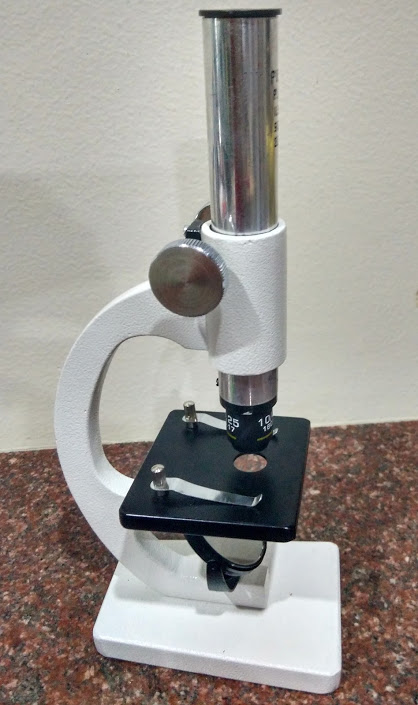
  Last week our class started with discussion about what make up our bodies, plants and all living beings. Kids knew the answer as cells. So, the question was  1. Can we see  these cells with naked eyes?. 2. So, if we have some illness , how does a doctor understand what kind of treatment to be done?. 3.  If the doctor advises for blood test, what do the labs do with the blood sample?. Depending on the type of the blood test, to see these cells,  bacteria etc we need special instrument called ' microscope'.  Microscope Microscopy is the science of investigating small objects and structures using special instrument called 'Microscope'.   The three main different types of microscope are dissection, compound and electron microscope. By using microscopes scientists were able to discover the existence of microorganisms, study the structure of cells, and see the smallest parts of plants, animals, and fungi. ...

Crystal snowflake ornaments!

Image
It was that time of the year; the joyful Christmas season. The kids wished to make some ornaments for their Christmas trees. To involve science in this activity [as usual ;-) ], I planned to show them 'crystal snowflake ornaments'. Materials needed  1. Borax powder - 3 tbsp 2. Water - 1 cup 3. Pipe cleaners - 2 [colors of your choice] 4. Strings - 2 5. Pencils - 2. 6. Bottles - 2. 7. Food colors - 2 drops (optional) Procedure 1. Boil a cup of water and mix the borax powder in it to make a borax solution. 2. Add food color [optional]. 3. Take a pipe cleaner and twist it into a star shape to give it a snowflake figure. 4. Pour the borax solution into a bottle or a glass. 4. Hang the pipe cleaner inside the borax solution using a string and a pencil. 5. Leave this setup undisturbed in a place for a day or two. 6. Your beautiful crystal ornament is ready for hanging! Cut 3 equal pieces of a pipe cleaner Twist them together to make a star ...

Can the ocean freeze?

Image
Last year we had been to Leh, Ladakh. There the tour guide was explaining to us how the Zanskar river freezes during winter where visitors go for trekking on the frozen river. It was amusing to my son who asked me, if Pacific ocean would also freeze just like the rivers in Leh. I replied to him to think about it and promised that we would do an experiment to verify when we get back home. So, to explain to him I decided to the following experiment in the class.  Ocean Freeze The experiment was about salt water freezing. We had a discussion about why the ocean does not freeze at 0 degrees.  Kids came up with different reasons. Guess what they were! There are 4 main factors for that. 1. High concentration of salt in the ocean water lowers the freezing point from 0 degrees to -2 degree centigrade. 2. The constant motion of the ocean currents keeps the water molecules from freezing into ice crystals. 3. The larger the volume of water, the more heat has to be remov...

The hoop glider!!!

Image
Our activity started with kids imagining to go to school  by a car, that is environmental friendly and flies in the air. One of them said , if he lived on a mountain and the school was in a valley he would do paragliding. So, we talked about gliders and how they fly without motors.Gliders always descend relative to the air in which they are flying. Para gliders, hand gliders are some of the gliders that we see these days. What are Gliders? Gliders are a type of aircraft which do not have engine, but use the wing design and air flow to fly around. Now, it was time for them to build one themselves, but using a different design and shape that they had seen. I gave them a straw to throw, which did not go very far. As they were brain storming, the idea of adding loops instead of the wings came to them. They were quick to decide that they would need 2 hoops instead of one to make it fly for some time. That is how kids made a hoop glider. It worked really well. design for...